Jersey City Named One of America’s Most Diverse Cities in 2026
The Statue of Liberty is technically located within Jersey City’s borders. New York City has jurisdiction over it, but the monument sits in Jersey City’s waters. That geographic fact has always felt like more than a footnote. It is a description.
WalletHub’s 2026 annual study of the most ethnically diverse cities in the United States ranked Jersey City #2 in the nation and #1 among all midsize cities in the country, with an ethnic diversity score of 72.77 out of 100. The study examined 501 of the most populated US cities using U.S. Census Bureau data as of January 2026.
The #1 midsize city ranking is worth noting separately. Midsize cities (between 100,000 and 300,000 residents) compete against a different set of communities than a place like Houston or New York. Jersey City beats every comparable city in the country on this metric. For the second year running.
| Rank | City | Score | Size Category |
|---|---|---|---|
| #1 | Germantown, MD | 73.03 | Small city |
| #2 ★ | Jersey City, NJ | 72.77 | #1 Midsize City |
| #3 | Gaithersburg, MD | 72.56 | Small city |
| #4 | Silver Spring, MD | 70.33 | Small city |
| #5 | Kent, WA | 70.10 | Small city |
What the Study Actually Measures
WalletHub used the Herfindahl-Hirschman Index, a statistical method originally developed for measuring economic market concentration. Applied to demographics, it measures not just whether a city has diverse residents, but how evenly distributed those groups are. A city where one group has 90% and another has 10% scores low. A city where four groups each hold roughly 25% scores high.
| Dimension | Weight | Jersey City Detail |
|---|---|---|
| Ethnoracial Diversity | 50% of score | No single group holds a majority. Population is broadly balanced across communities. |
| Linguistic Diversity | 33% of score | 49% English-only at home. 20% Spanish, 14% Indo-European (incl. Hindi, Portuguese, Polish), 12% Asian/Pacific Islander languages. |
| Birthplace Diversity | 17% of score | High share of foreign-born residents; significant migration from other states and countries. |
That combination of a broadly balanced population, multilingual households, and diverse countries of origin is what produces a score that ranks above cities five times Jersey City’s size. See the full methodology at wallethub.com.
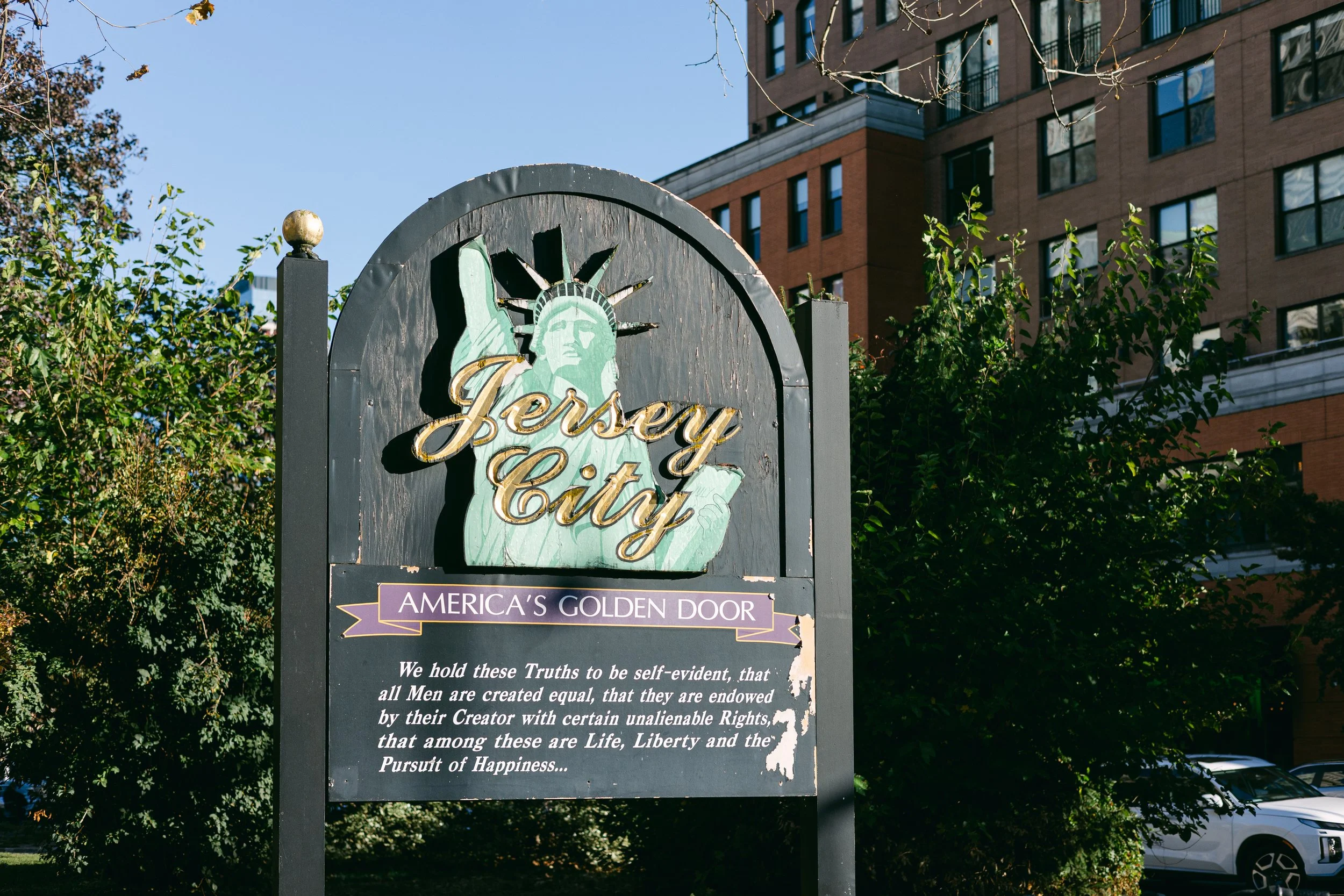
Jersey City has carried the nickname "America's Golden Door" for generations, a reference to its history as an entry point for immigrant communities arriving to New York Harbor.
What That Looks Like on the Ground
The ranking is useful confirmation. The better evidence is the city itself.
Take Newark Avenue in the Journal Square corridor, where South Asian grocers, Pakistani restaurants, and Indian sweets shops have operated for decades alongside newer Korean and Latin American businesses. Or Palisade Avenue in The Heights, where Dominican bodegas, Mexican taquerias, and Caribbean bakeries occupy consecutive storefronts. Downtown, the restaurant scene reflects an unusually compressed version of the city’s range, with Filipino, Brazilian, Senegalese, Vietnamese, and Japanese options within a few city blocks.
The Mitsuwa Marketplace in the Newport area is one of the largest Japanese grocery stores on the East Coast. The Powerhouse Arts District draws a creative community with roots across Latin America and Asia. Liberty State Park hosts the city’s largest public gatherings, including a July 4 fireworks festival that draws over 100,000 people each year.
For families exploring what life here looks like across seasons, our Things to Do in Jersey City guide and summer activities guide cover the city at street level.

Jersey City's population is broadly balanced across communities, no single ethnic group holds a majority.
What It Means for Buyers
The practical real estate effect of demographic diversity is demand stability. A city where the buyer pool draws from multiple national, cultural, and economic communities does not rely on any single group’s financial health, migration patterns, or preferences. When one cohort pulls back, others fill the gap.
Jersey City has maintained consistent buyer demand across market cycles for this reason. International buyers, primarily from South Asia, East Asia, and Latin America, represent a significant share of purchase activity in the city. Many arrive in New Jersey through professional paths in finance, technology, and healthcare, rent for several years, then buy as their families grow and their financial footing solidifies.
For buyers coming to Jersey City from Manhattan or Brooklyn, the comparison is usually about price and proximity. Jersey City’s citywide median sits around $690,000, with Downtown commanding closer to $865,000. Multilingual neighborhoods mean service infrastructure, including banks, healthcare providers, and schools, that operates across languages. For families arriving from outside the US, that is not a minor detail.
Our Jersey City buyer’s agent page covers the full picture of what the buying process looks like in the current market.
| Metric | Data | Context |
|---|---|---|
| Citywide Median Sale Price | ~$690,000 | Up from ~$650,000 in 2024 |
| Downtown JC Median | ~$865,000 | PATH-adjacent; highest demand submarket |
| Days on Market | ~40 days | Competitive for well-priced units |
| International Buyer Activity | Significant | South Asian, East Asian, Latin American |
| Buyer Pool Breadth | Broad | Multiple demographics active simultaneously |
What It Means for Sellers
The inverse side of a broad buyer pool is a seller’s advantage. When you list a property in Jersey City, you are not marketing to one demographic profile. You are marketing to the city’s full range of buyers, which spans income levels, financing structures, family compositions, and geographic origins.
That breadth matters most in the mid-range of the market, where properties priced between $500,000 and $800,000 attract the widest spread of competing offers. It also matters for properties in transitional neighborhoods, where gentrification-era pricing assumptions often underestimate the international buyer demand that has been present in those areas for years. Our full Jersey City community guide covers market conditions by neighborhood.
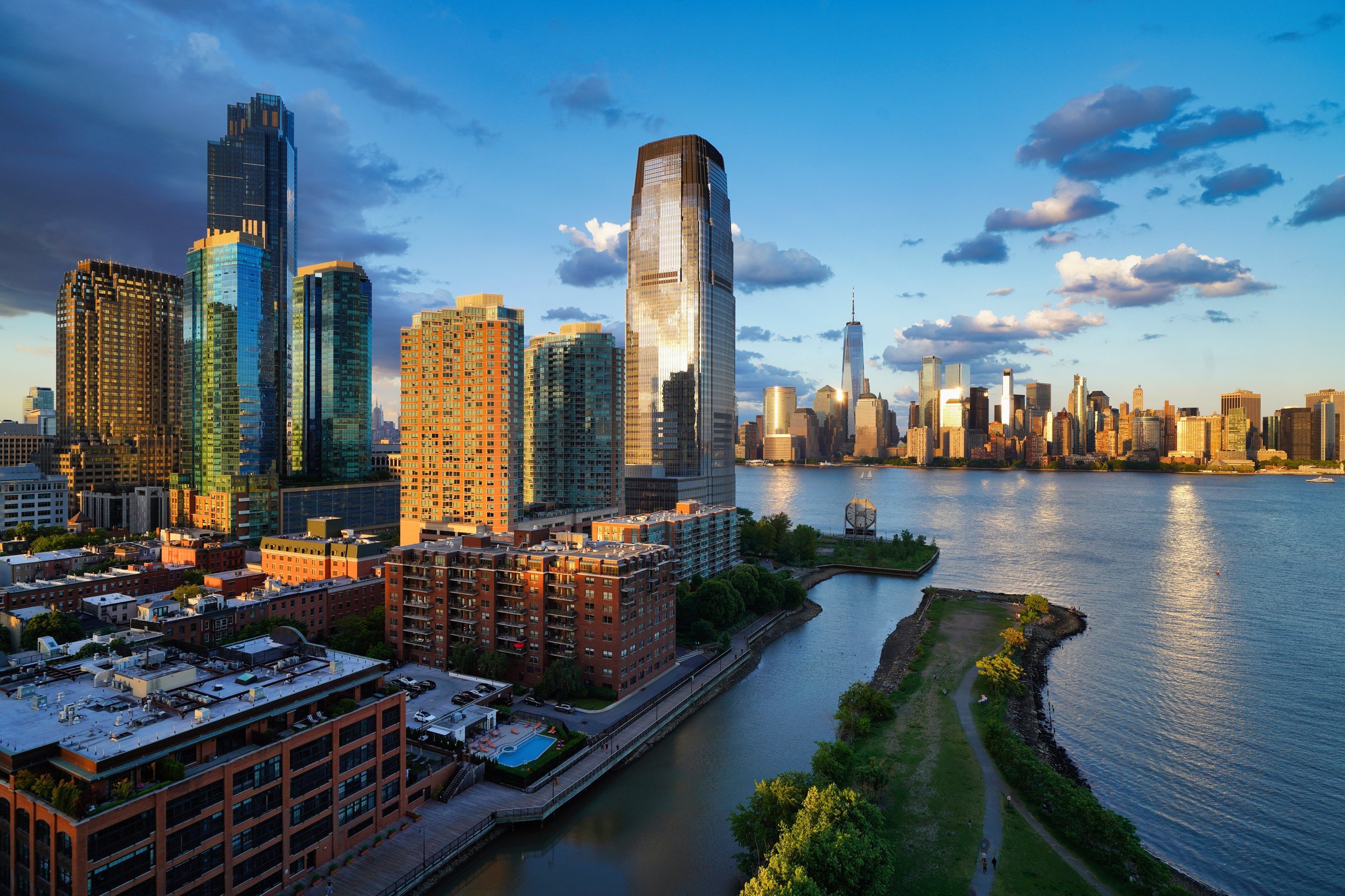
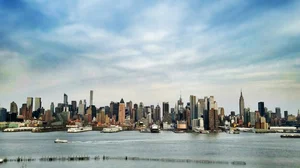
Jersey City's Downtown waterfront, with Lower Manhattan across the Hudson River. The city ranks #2 in WalletHub's 2026 national ethnic diversity study and #1 among all midsize US cities.
A City Built to Stay This Way
Jersey City earned a perfect score of 100 on the Human Rights Campaign’s Municipal Equality Index for 12 consecutive years, a run that began under former Mayor Steven Fulop and reflects policy choices made across a decade: non-discrimination ordinances, multilingual city services, sanctuary city designation, and transgender-inclusive benefits for city employees.
Fulop served as mayor from 2013 to January 2026. Mayor James Solomon, who took office on January 15, 2026, inherits a city where those institutional foundations are established and not under review. The HRC score, the sanctuary policies, and the multilingual service infrastructure are features of the city’s administrative structure.
Our diverse community is one of our strongest assets. This recognition highlights our commitment to fostering an inclusive environment where everyone feels safe and welcome with equal opportunities for all.
Frequently Asked Questions
Ready to make Jersey City home?
The Jill Biggs Group has spent over 20 years helping buyers and sellers navigate one of the most internationally active markets in the country. Whether you are buying your first home here or listing in a transitional neighborhood, we know this market at street level.