Quick summary

The best NJ commuter town for you depends on three things: where in Manhattan you work, how much you want to spend, and whether you want urban or suburban living. PATH-connected towns like Hoboken and Jersey City are fastest for Downtown and Midtown workers. NJ Transit towns like Montclair, Maplewood, and Summit suit buyers seeking more space, top schools, and a suburban feel.

Use the comparison table below to find the right fit — then explore each town's full profile for commute times, median prices, and who it suits best.

New Jersey continues to be one of the smartest choices for NYC professionals who want more space, better value, and a higher quality of life without sacrificing access to Manhattan. With flexible work schedules and hybrid commuting now the norm, buyers are prioritizing towns that offer reliable transit, walkable neighborhoods, and strong lifestyle amenities.

Below, we break down the best NJ commuter towns for NYC professionals in 2025–2026, including how they compare by commute type, lifestyle, and who each town is best suited for.

Compare NJ Commuter Towns at a Glance

Town Transit To Midtown To Downtown Median price Best for
Hoboken PATH + Ferry ~15 min ~10 min ~$910K Urban walkable, NYC pace
Downtown JC PATH + Ferry ~20 min ~8 min ~$875K Downtown workers, waterfront
Jersey City (citywide) PATH + Bus 20–35 min 8–20 min ~$705K Value vs Hoboken, diversity of neighborhoods
Weehawken Ferry + Bus 10–20 min 15–25 min ~$913K Skyline views, quieter pace
Montclair NJ Transit rail ~35 min ~50 min ~$975K Families, arts, top schools
Maplewood NJ Transit Midtown Direct ~32 min ~45 min ~$875K Creative community, diversity
Summit NJ Transit direct ~45 min ~55 min ~$1.2M Polished downtown, elite schools
Westfield NJ Transit direct ~50 min ~60 min ~$1.3M Family living, large homes

Median prices sourced from Redfin, Q1 2026. Commute times are peak-hour estimates door-to-midtown/downtown Manhattan. Individual neighbourhood prices within Jersey City and Hoboken vary significantly.

Midtown vs Downtown Manhattan: Which NJ Commute Works Best?

Professionals working in Downtown Manhattan often prioritize PATH-connected towns like Hoboken and Jersey City, where frequency and late-night service matter most. These towns support flexible schedules and car-free living.

Those working in Midtown Manhattan tend to favor NJ Transit towns such as Maplewood, Summit, and Montclair, where Midtown Direct service offers a predictable commute and access to larger homes and quieter neighborhoods.

Hoboken NJ Path FerryTop NJ Commuter Towns for NYC Professionals

14th Street Ferry, Hoboken

1. Hoboken, NJ
Best for: Urban lifestyle + fastest NYC access
Median price
~$910K
To Downtown NYC
~10 min PATH
To Midtown NYC
~15 min PATH
Hoboken is the gold standard for NYC professionals who want to keep the energy and pace of city living without Manhattan prices. The entire city is walkable, the dining and nightlife scene is genuinely excellent, and the PATH + ferry combination means you're almost never more than 15 minutes from any major Manhattan transit hub. Most buyers here are choosing between condos in modern high-rises and pre-war brownstone buildings — both are plentiful. The market is competitive: homes receive multiple offers and sell in under 35 days. Flood risk in some areas is worth factoring into any purchase decision.
PATH + Ferry Walkable Waterfront Multiple offers common Flood risk in some areas
JBG insight: Pier A Park and the Hoboken waterfront consistently come up in buyer conversations as a lifestyle differentiator — the ability to run, kayak, or have dinner with an unobstructed Manhattan skyline view is something no outer borough can replicate. For buyers comparing Hoboken to Jersey City, the key question is whether the PATH access premium is worth the price gap.
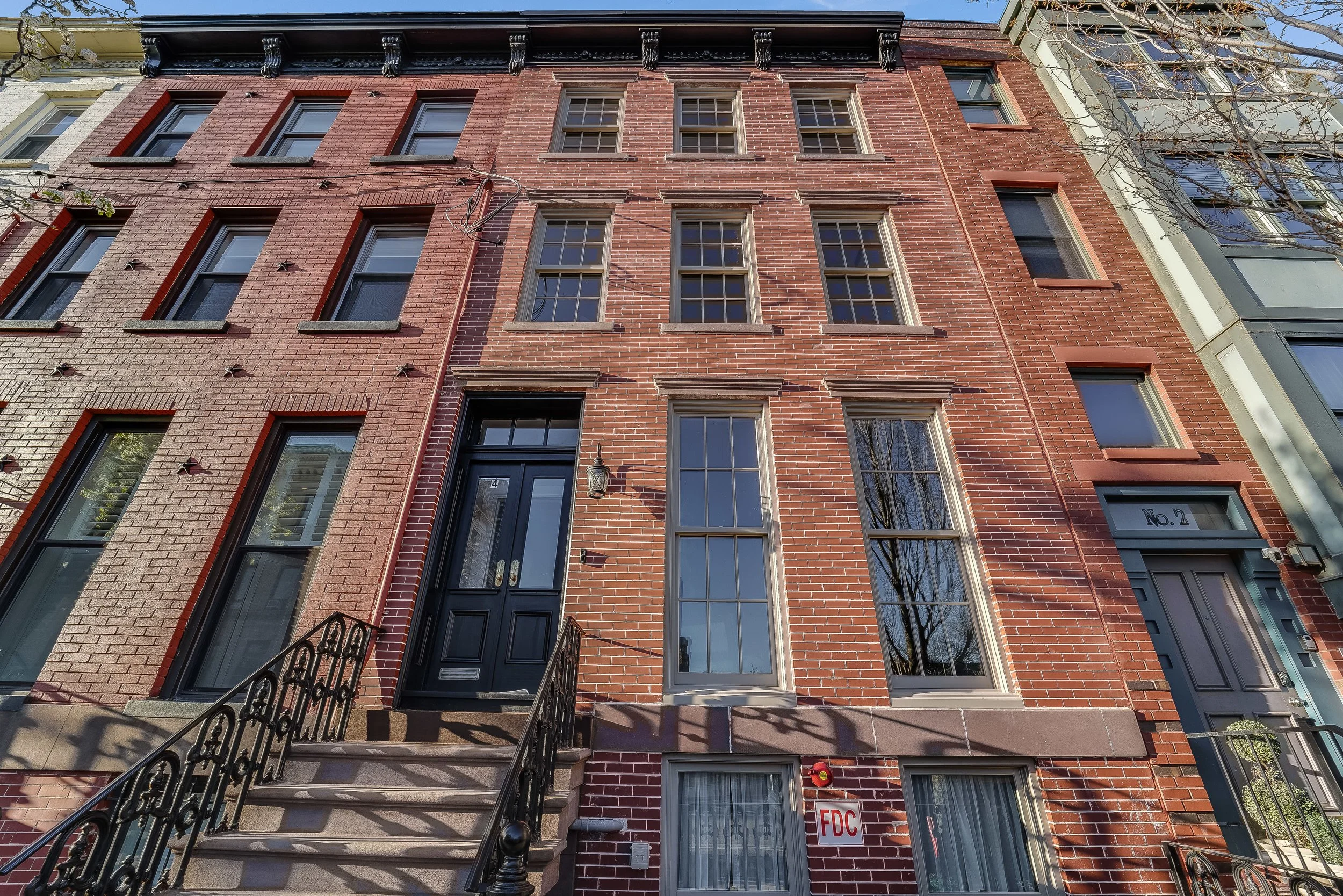
residential street in Jersey City close to public transportation

4 Mercer, Jersey City

2. Jersey City (Downtown + Heights)
Best for: Value, diversity of neighbourhoods, waterfront access
Median price (citywide)
~$705K
Downtown to WTC
~8 min PATH
Journal Sq to 33rd
~20 min PATH
Jersey City offers a wider range of price points than Hoboken — from $400K condos in older buildings to $1M+ waterfront luxury — and a broader range of neighbourhood characters. Downtown Jersey City (Exchange Place, Paulus Hook, Newport) rivals Hoboken in transit access and increasingly rivals it in dining and culture. The Heights is drawing buyers who want a brownstone neighbourhood with genuine character at lower prices. Jersey City is particularly compelling for Downtown Manhattan workers — the WTC PATH commute at 8 minutes is faster than most Brooklyn or Queens subway rides.
PATH + Ferry + Bus Wider price range Growing arts scene Diverse neighbourhoods
JBG insight: The most common question we hear: "Is Jersey City as good as Hoboken?" The honest answer is that Downtown JC beats Hoboken on commute time to Wall Street, and the Heights beats both on price-per-square-foot for buyers willing to take the bus. The gap in walkability and dining has narrowed significantly in the last three years.
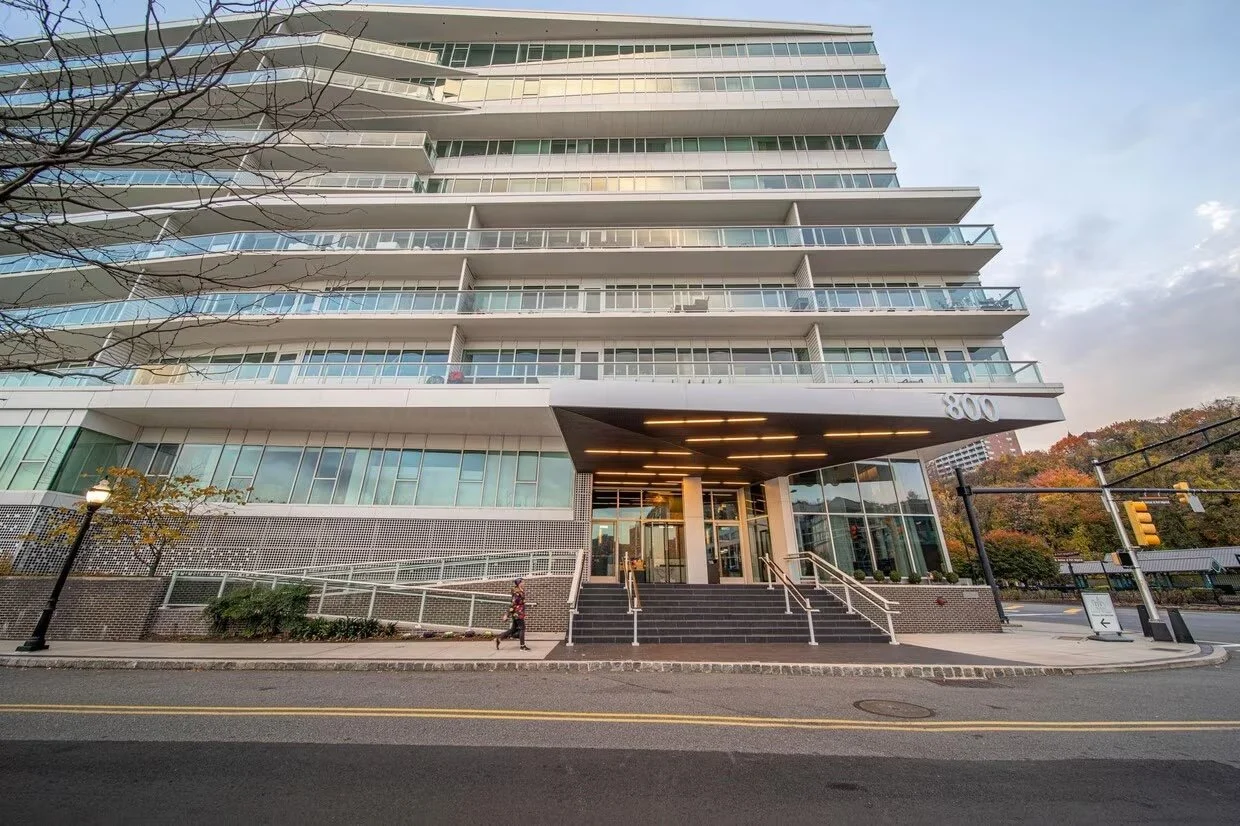
800 Ave at Port Imperial Weehawken

800 Ave at Port Imperial, Weehawken

3. Weehawken & West New York
Best for: Skyline views, quieter waterfront living
Weehawken median
~$913K
West New York median
~$578K
Ferry to Midtown
~10–20 min
Weehawken sits on the Palisades directly across from Midtown, which means some of the best unobstructed Manhattan skyline views in New Jersey — without the density of Hoboken or Jersey City. Port Imperial is the luxury waterfront enclave here, with high-rise condos and direct NY Waterway ferry access to Midtown in around 10 minutes. West New York offers considerably more affordable entry points with similar ferry and bus access. The trade-off: both towns are more car-dependent than Hoboken or JC for day-to-day errands.
Ferry + Bus Hudson River views Quieter pace Car helpful for errands
JBG insight: Weehawken is consistently underrated in commuter town conversations. The ferry to Midtown is one of the most pleasant commutes in the metro area — less crowded than PATH, scenic, and fast. For buyers who work in Midtown and prioritise quality of life over nightlife, this is worth a serious look.
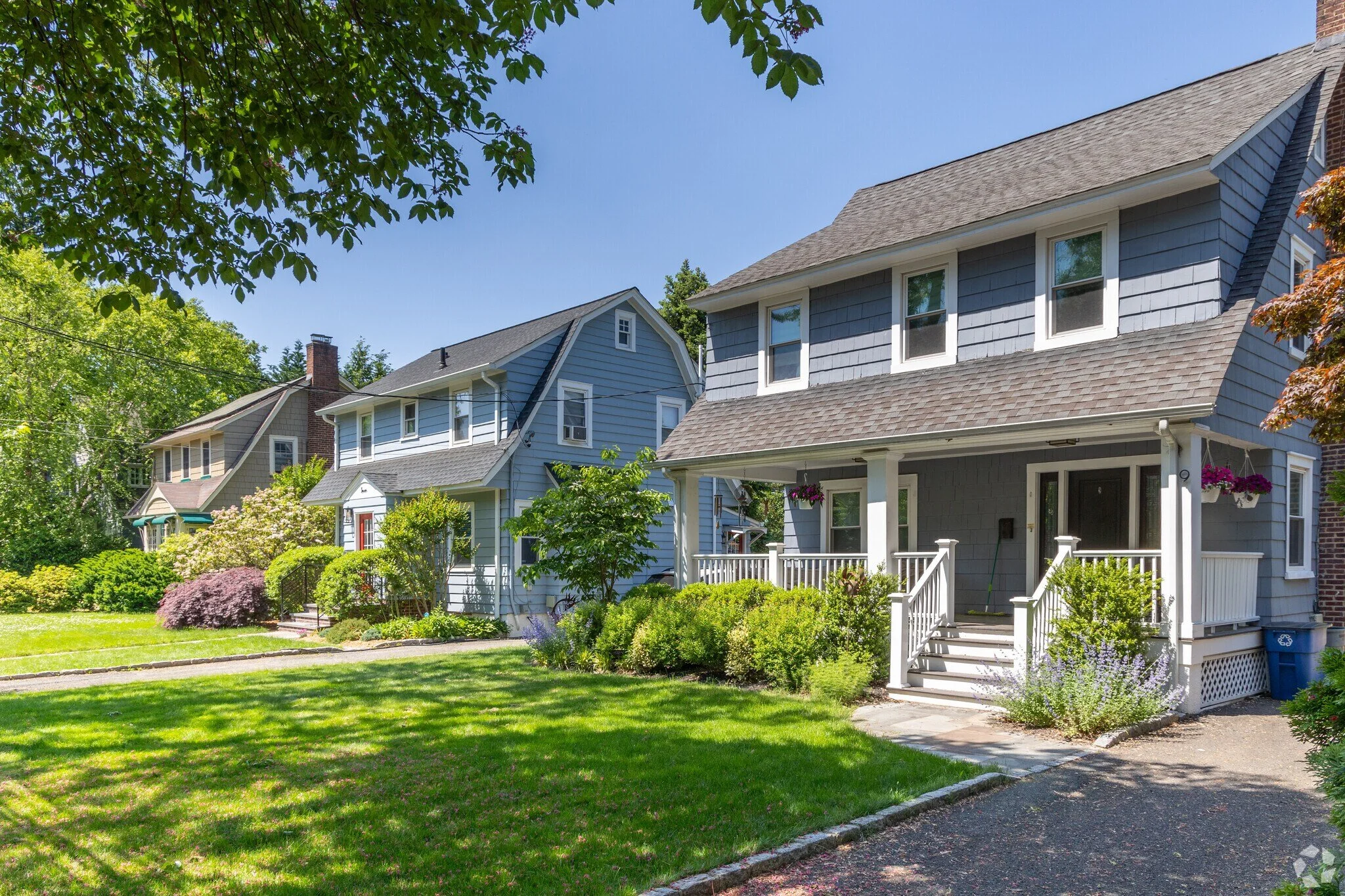
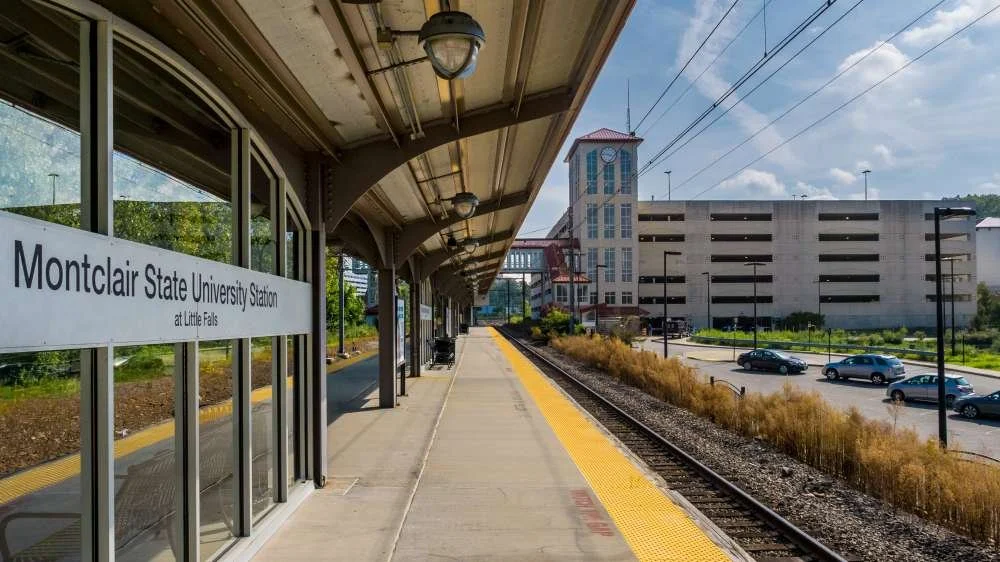
Monclair, NJ ytrain station close to residential areas

4. Montclair & Glen Ridge

Best for: Suburban families, arts scene, top-rated schools
Montclair median
~$975K
Glen Ridge median
~$1.1M
To Penn Station
~35–40 min
Montclair is the cultural capital of suburban Essex County — a walkable downtown with independent restaurants, a film centre, a world-class art museum, and year-round events. The school district draws buyers from across the state. Glen Ridge is quieter and more residential, with some of the most beautiful Victorian and Colonial architecture in New Jersey. Both towns run on the Montclair-Boonton NJ Transit line into Penn Station. The commute is reliable and direct, but at 35–40 minutes it's a different category than PATH-connected towns — better suited to hybrid workers commuting 2–3 days a week.
NJ Transit Montclair-Boonton line Top public schools Walkable downtown Arts & culture Best for hybrid commuters
JBG insight: Montclair's market has run very hot in early 2026 — median sale prices up over 40% year-over-year per Redfin Q1 data, with homes selling in under 21 days. If this is on your shortlist, move quickly and be prepared to compete.
Maplewood New Jersey

Maplewood, New Jersey

5. Maplewood & South Orange

Best for: Creative community, Midtown Direct access, diversity
Maplewood median
~$875K
To Penn Station
~32 min direct
Market pace
23 days avg
Maplewood and South Orange share a train station (the "SO/MAP" commuter hub) and a tightly-knit, culturally diverse community that's been attracting creative professionals for over a decade. The Midtown Direct NJ Transit line means no transfer at Newark — you're at Penn Station in 32 minutes. Maplewood Village has a genuinely lovely Main Street with restaurants, a bookshop, and farmers' market. South Orange adds a state university (Seton Hall) and a more varied housing stock. Both towns offer considerably more house for money than Hoboken or Jersey City at comparable prices.
NJ Transit Midtown Direct No transfer at Newark Highly walkable downtown Diverse community
JBG insight: "SO/MAP" has become shorthand in NYC real estate circles for a certain type of buyer — creative, family-oriented, values community over nightlife. It's one of the few suburban markets where you genuinely hear neighbours describe their town with pride. That community cohesion shows up in retention rates too — people don't tend to leave.
Westfield Top NJ Commuter Towns for NYC Professionals (2025 List)

Westfield, New Jersey

6. Summit & Westfield
Best for: Top schools, polished downtowns, family buyers with larger budgets
Summit median
~$1.2M
Westfield median
~$1.3M
To Penn Station
45–50 min
Summit and Westfield represent the upper tier of the NJ commuter market — polished, well-resourced, with school districts that routinely rank among the best in the state. Summit's downtown is compact and genuinely excellent: independent boutiques, acclaimed restaurants, and a park system that makes car-free weekend living easy. Westfield is slightly larger and more residential, with one of the best Main Streets in New Jersey. At 45–50 minutes to Penn Station, both are firmly in hybrid-commuter territory — this is where buyers optimise for lifestyle, space, and schools over commute speed.
NJ Transit direct to Penn Station Top-ranked schools Walkable downtowns Larger budget required
JBG insight: Summit's market moves fast — homes selling in 13 days on average per Redfin Q1 2026. At this price point, buyers need mortgage pre-approval in place and an agent who knows the inventory before it hits Zillow. Summit rewards preparation.
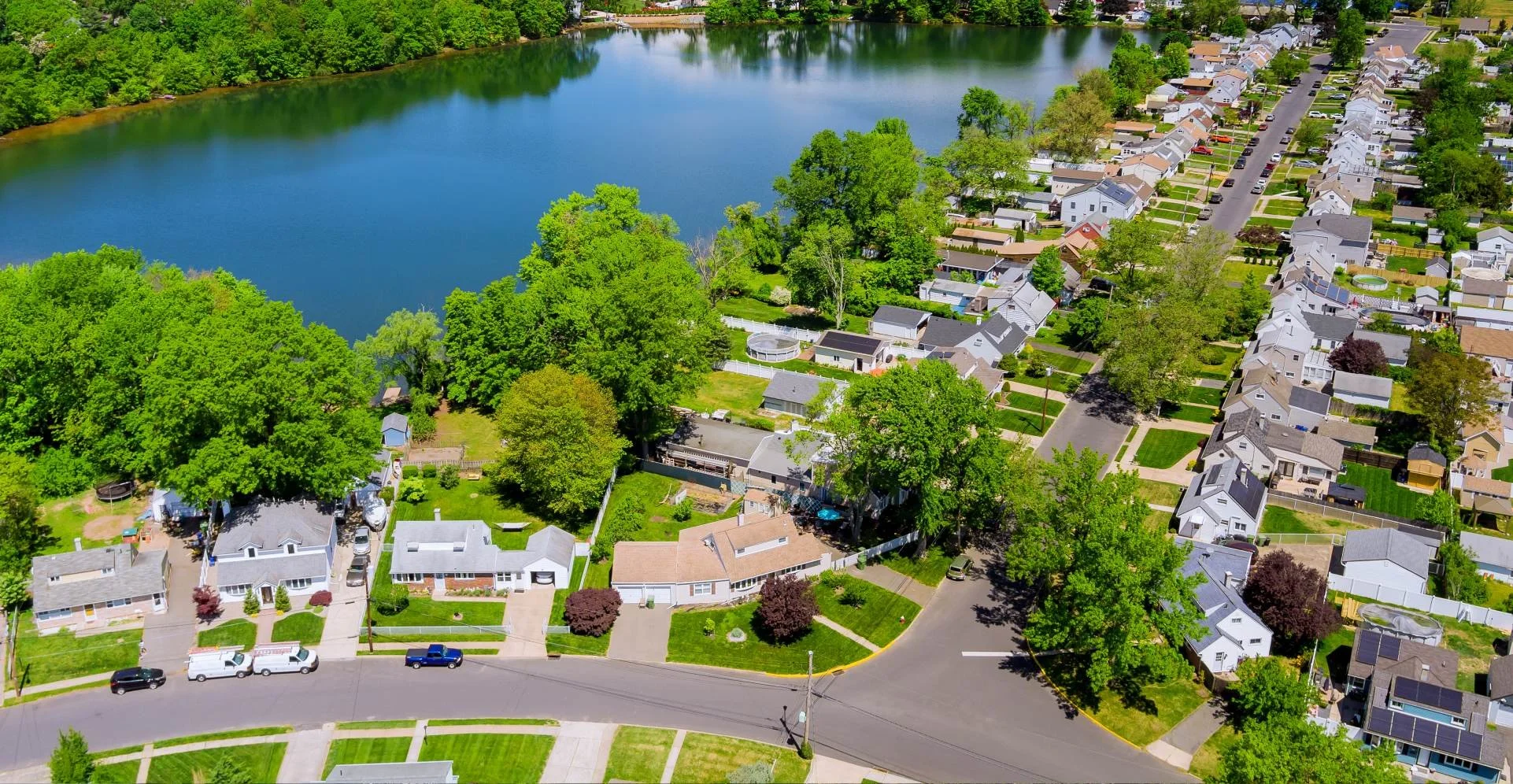
Aerial view, homes in Tenafly, NJ

Tenafly, NJ

7. Tenafly, Englewood & Ridgewood (Bergen County)

Best for: Education-focused families, larger properties, strong resale value
Tenafly median
~$1.1M
Englewood median
~$600K
Ridgewood median
~$1.1M
Bergen County's commuter towns offer some of the most highly rated public schools in New Jersey alongside larger properties and quieter, more residential streets. Tenafly and Ridgewood appeal to buyers for whom school district quality is a primary driver — both routinely rank in the top tier statewide. Englewood offers more varied price points and a more urban feel, with a growing arts and dining scene. Transit to Manhattan is primarily by NJ Transit bus and express coach — reliable but less frequent than rail options further south.
NJ Transit bus + express coach Top-ranked schools Larger properties Bergen County location
JBG insight: Bergen County buyers often come to us after initially looking at Montclair or Summit — they want the school quality but find the Essex County markets too competitive. Tenafly and Ridgewood offer a comparable school experience with slightly more inventory breathing room, though both markets are active in spring 2026.

NJ Commuter Towns FAQ

What is the fastest NJ commute to Manhattan?

Downtown Jersey City offers the fastest commute: the PATH train from Grove Street or Exchange Place reaches the World Trade Center in 8–10 minutes. Hoboken via PATH reaches Midtown in approximately 15 minutes and Downtown in 10 minutes. Weehawken's NY Waterway ferry reaches Midtown in around 10 minutes on the water, though terminal access time adds to the door-to-door total.

What is the best NJ town to live in if I work in Downtown Manhattan (Wall Street / World Trade Center)?

Downtown Jersey City is the top choice for Downtown Manhattan workers. The PATH train from Exchange Place or Grove Street reaches the World Trade Center in 8–10 minutes — faster than most subway rides from Brooklyn or Queens. Hoboken is also excellent, with a 10-minute PATH to WTC. Both towns have strong housing stock, waterfront access, and 24/7 transit service.

What is the best NJ town to live in if I work in Midtown Manhattan?

For Midtown Manhattan workers, Hoboken, Maplewood, and Montclair are the strongest options depending on budget and lifestyle. Hoboken offers the fastest transit at ~15 minutes via PATH. Maplewood offers a direct Midtown NJ Transit train (no transfer) in ~32 minutes at a lower price per square foot. Montclair is ~35 minutes on NJ Transit and suits buyers prioritising schools and suburban lifestyle.

Can you live in New Jersey and commute to NYC without a car?

Yes — Hoboken, Downtown Jersey City, and parts of Maplewood and Montclair are fully car-free liveable. Hoboken is particularly walkable (Walk Score 89) with supermarkets, restaurants, and daily errands all on foot. Montclair and Maplewood have walkable downtowns but suburban areas where a car is more useful for grocery runs. Towns further from urban cores — Tenafly, Summit, Westfield — are car-dependent for most daily errands even if the commute itself is transit-based.

Are NJ commuter towns worth it for hybrid workers in 2026?

Yes — and 2026 is arguably the strongest case yet. With hybrid schedules now standard across most industries, buyers no longer need to optimise for a 5-day commute. This has unlocked towns like Montclair, Maplewood, and Summit that would have felt too far for daily commuters but are perfectly positioned for 2–3 days a week in the office. Redfin specifically named Northern NJ as one of the US markets most likely to heat up in 2026, citing return-to-office trends driving demand for NYC-accessible suburbs.

What does it cost to commute monthly from NJ to NYC?

Commute costs vary significantly by transit type and town. PATH train from Hoboken or Jersey City: approximately $114–$120/month (40-trip TAPP card or 30-day SmartLink pass at $3.00/ride). NJ Transit rail from Montclair, Summit, or Maplewood: monthly passes range from approximately $150–$260 depending on zone. NY Waterway ferry from Weehawken: monthly commuter passes vary by route — check nywaterway.com for current pricing. NJ Transit bus from Jersey City or Bergen County to Port Authority: $5–$6 per ride; monthly pass pricing at njtransit.com.

Which NJ commuter town has the best public schools?

Summit, Westfield, Ridgewood, and Tenafly consistently rank among the top public school districts in New Jersey. Montclair is unique in offering one of the most diverse and highly regarded magnet school systems in the state. Glen Ridge, though small, has excellent schools and a very tight-knit community. Hoboken's public schools have improved significantly in recent years and are now competitive with many suburban districts. Jersey City's school quality varies considerably by neighbourhood and school — private and charter options supplement the public system for many families.

Is Hoboken or Jersey City better for NYC commuters?

Both are excellent — the right choice depends on where in Manhattan you work and how much you want to spend. Hoboken is better for Midtown workers (15-min PATH to 33rd St) and offers a more uniformly walkable, urban feel throughout the city. Downtown Jersey City is better for Wall Street / Financial District workers (8-min PATH to WTC) and offers lower entry prices. Jersey City overall has a wider range of neighbourhoods and price points. For a detailed comparison, see our Hoboken vs Jersey City relocation guide.